


Montessori Solar System 3D Puzzle Model for Kids
Couldn't load pickup availability
Description
Product information:
Color: D40-3D planet cognitive board
Processing Method: LOGO labeling
Applicable age: children (4-6 years old)
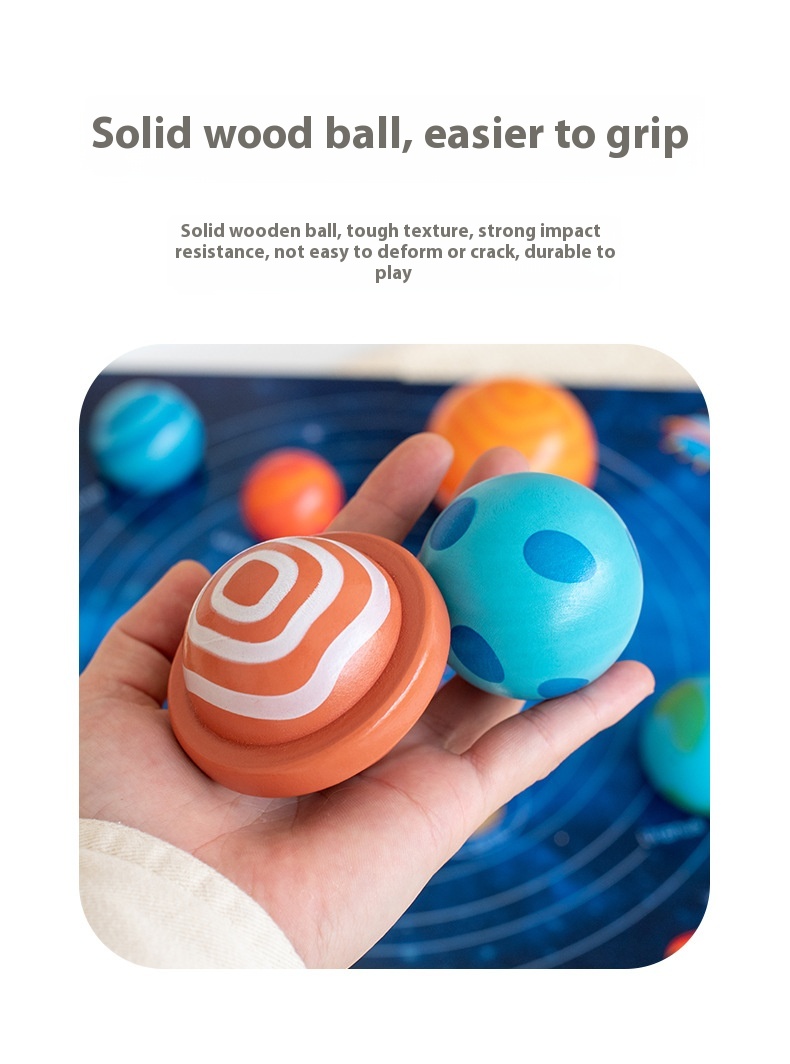
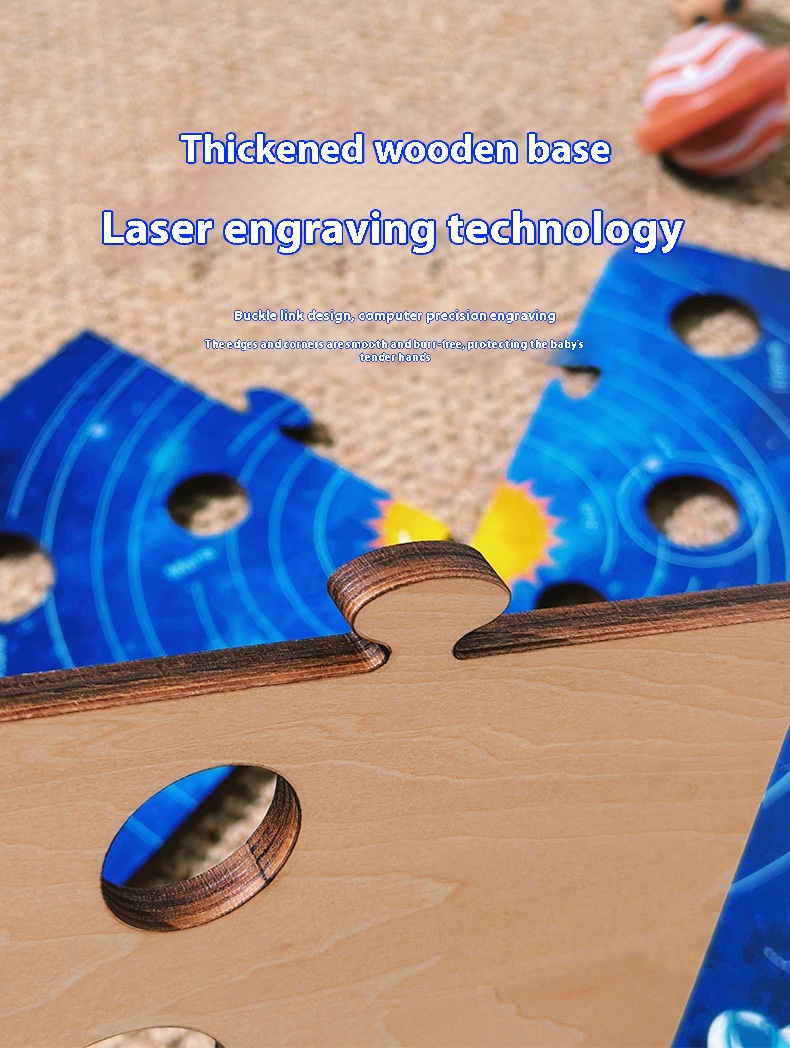
Material: Wooden
Electric or not: no
Packing method: Color box
Category: Other educational toys
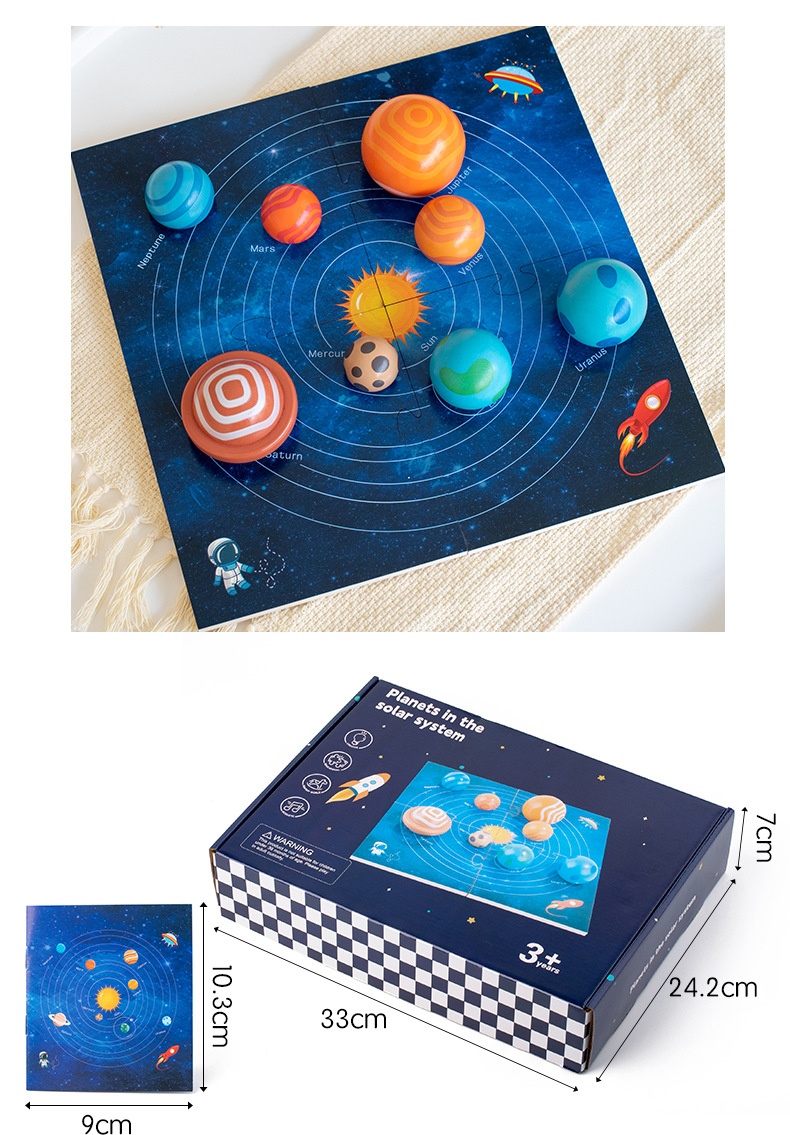
Specification: 33*24.2*7
Packing list:
Wooden Puzzle*1
Product Image: 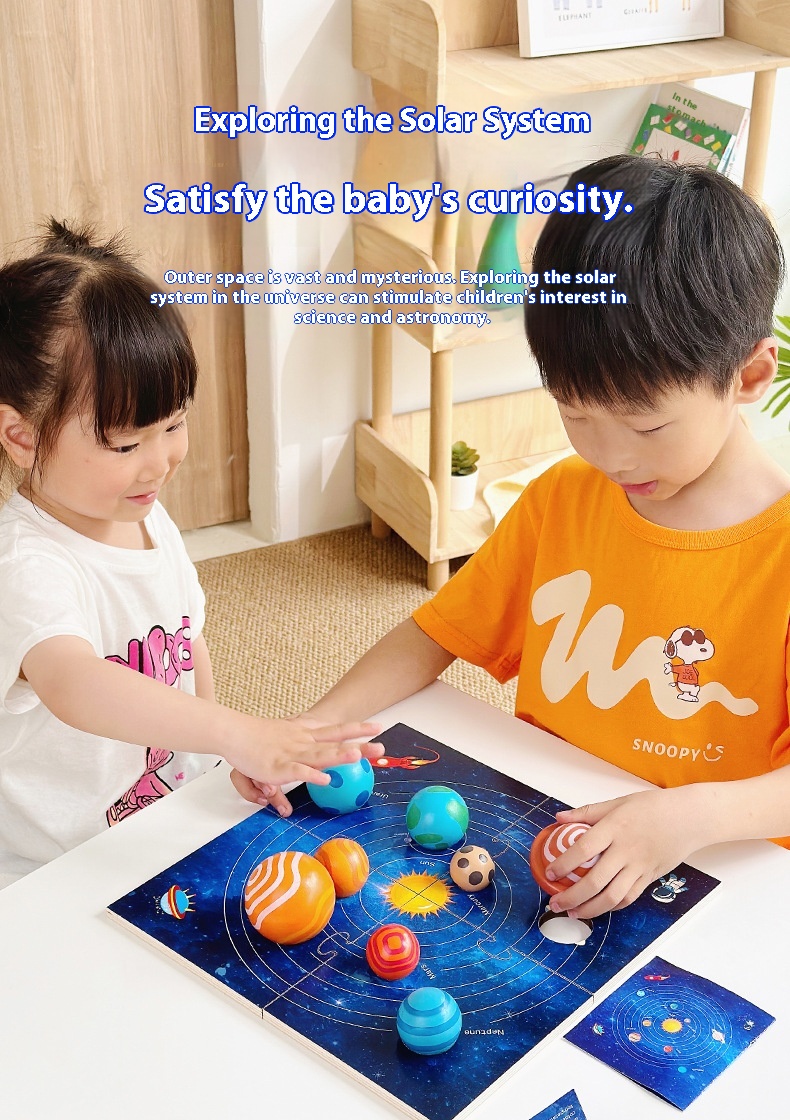
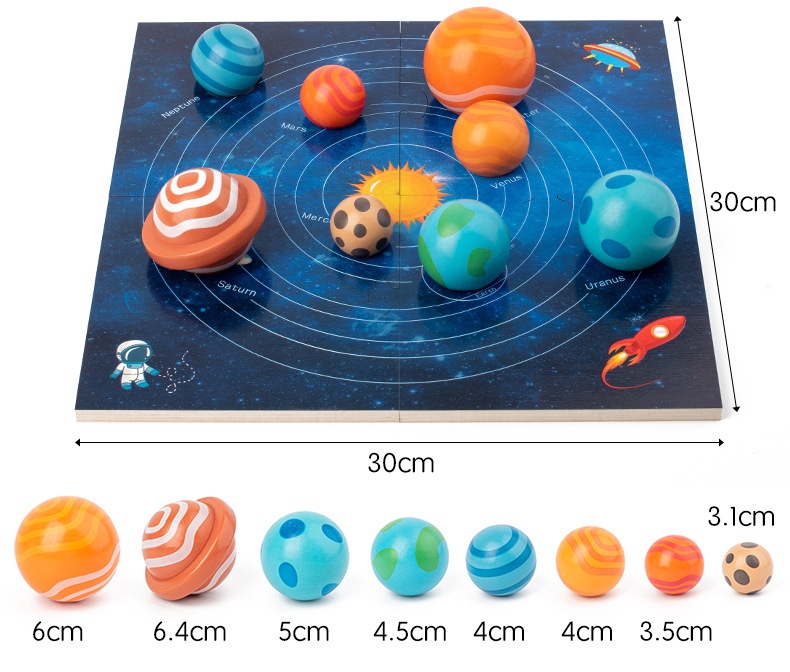
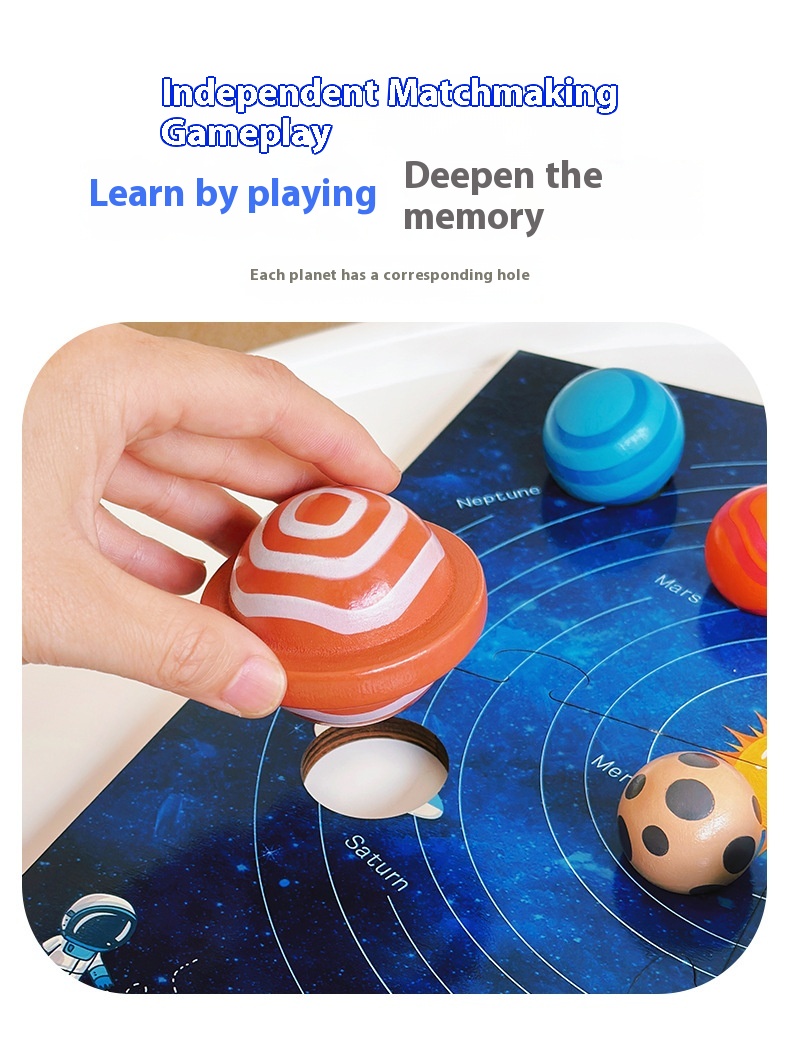
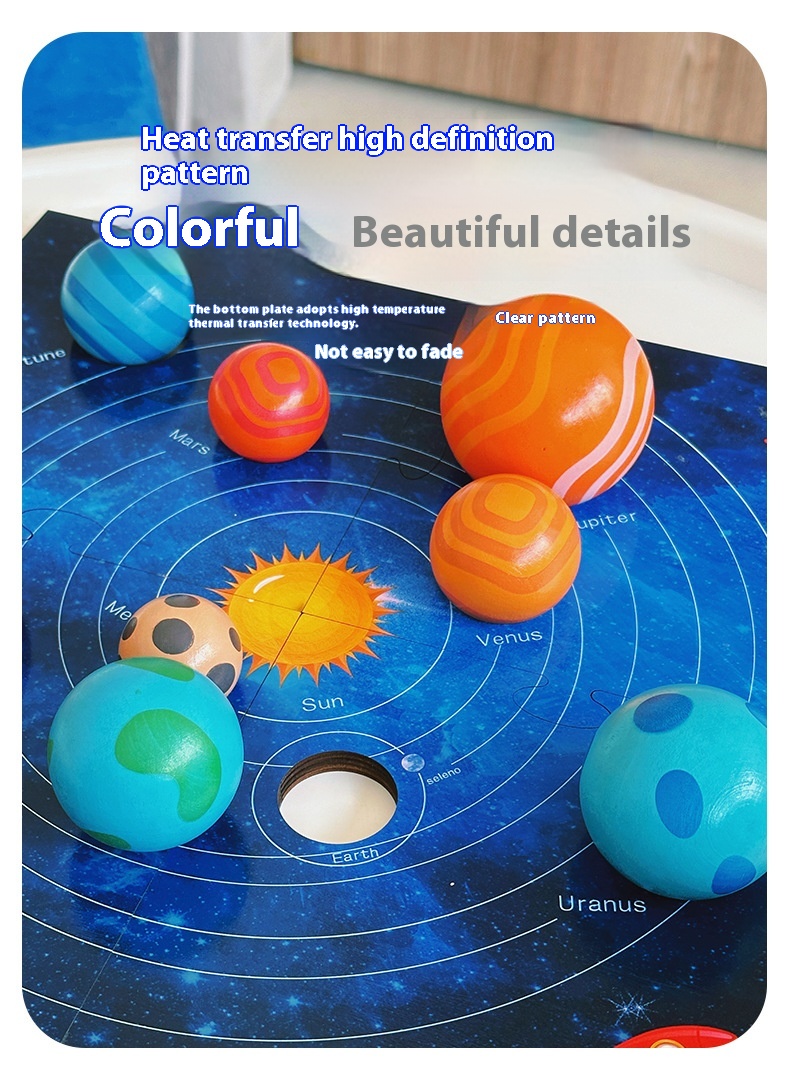
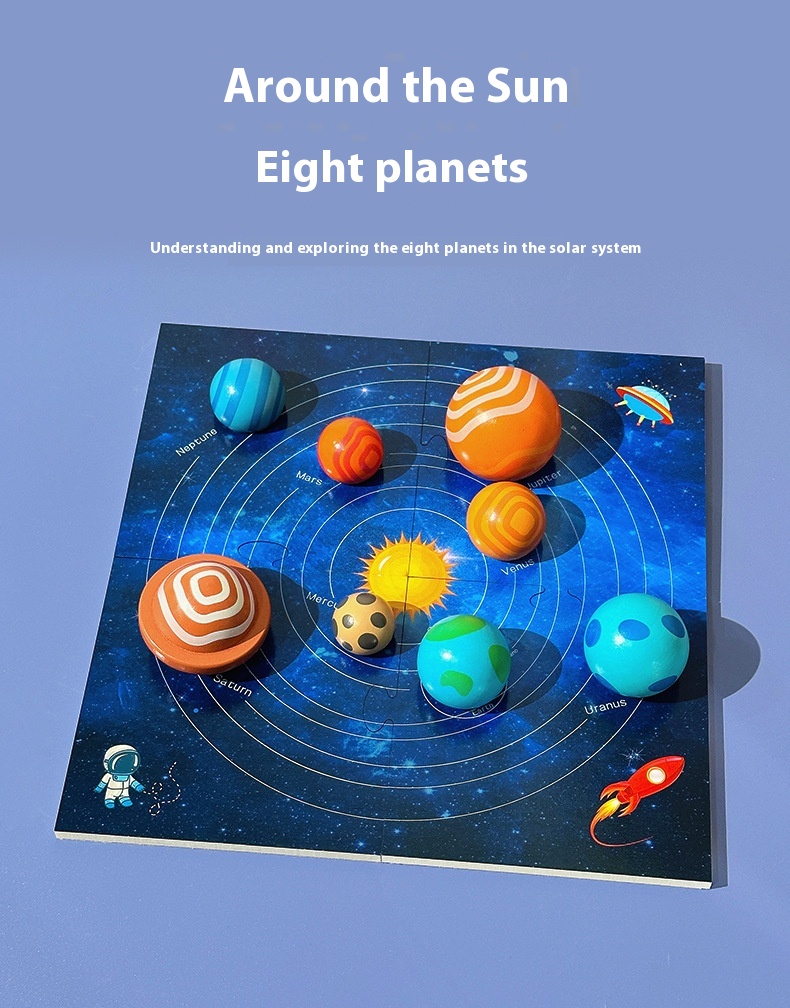
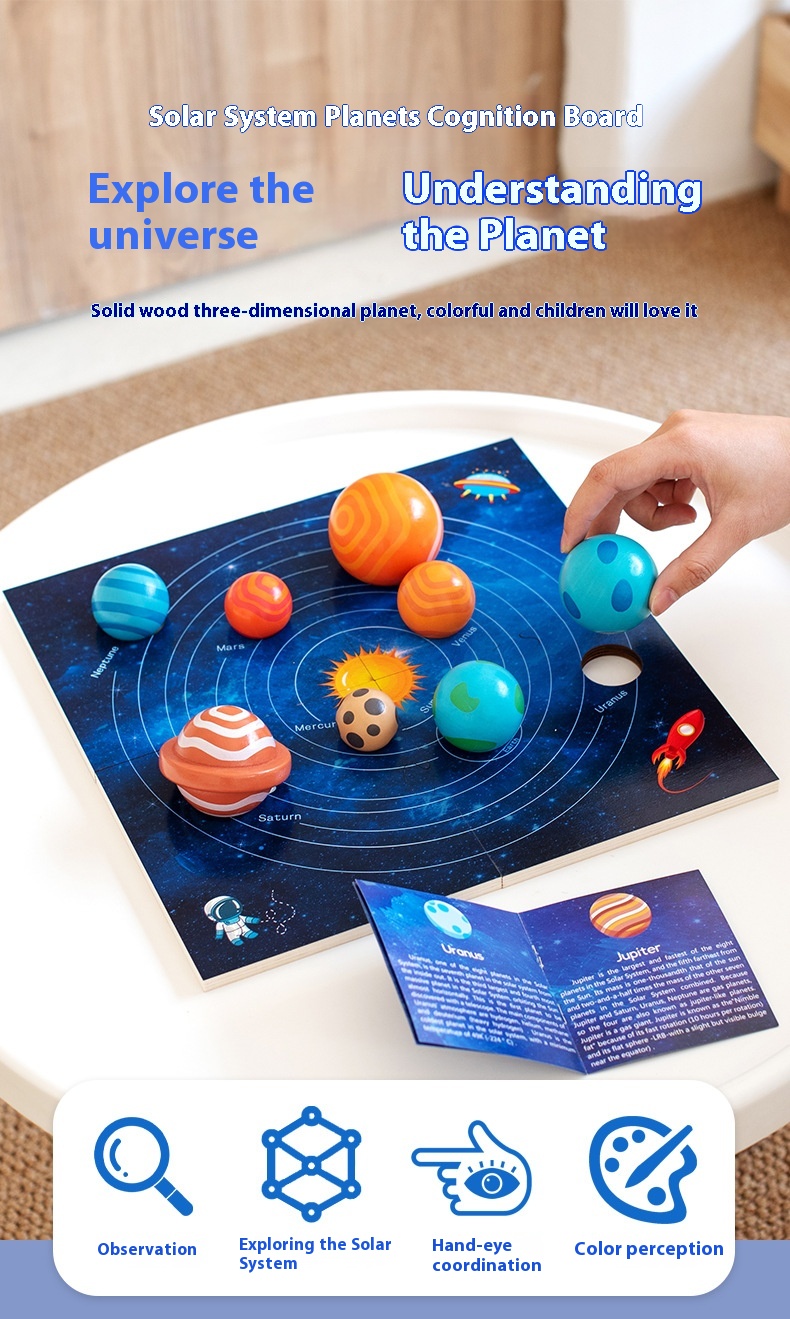
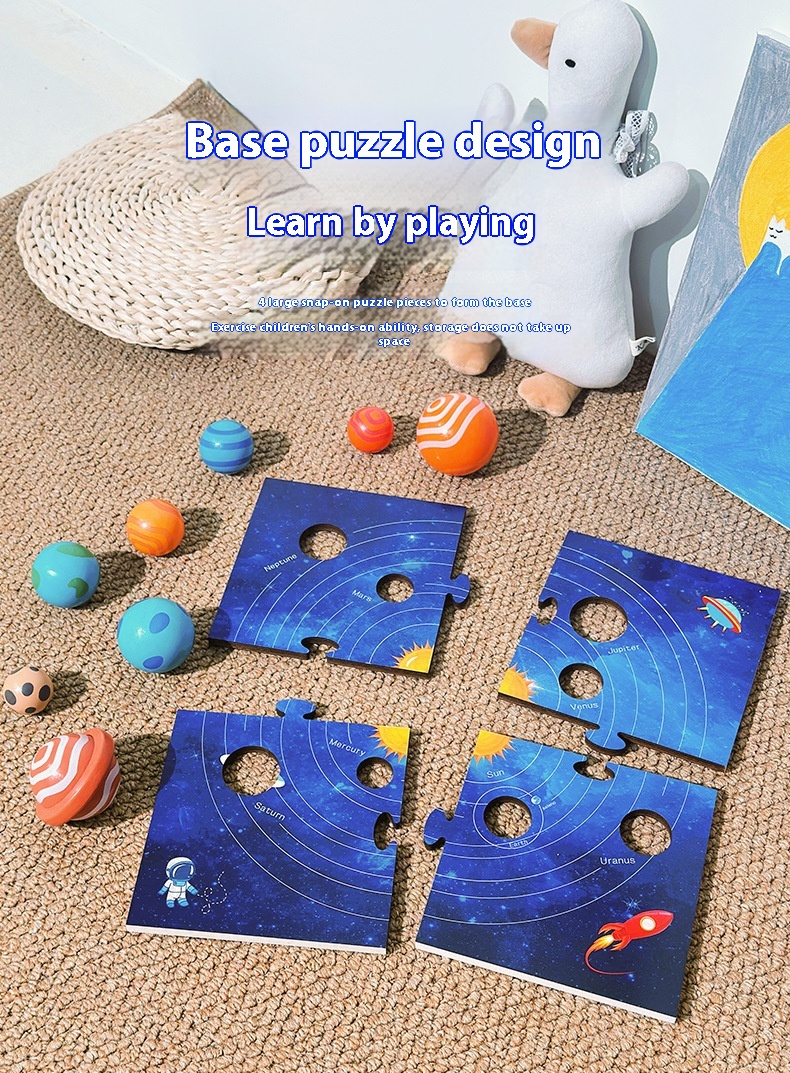
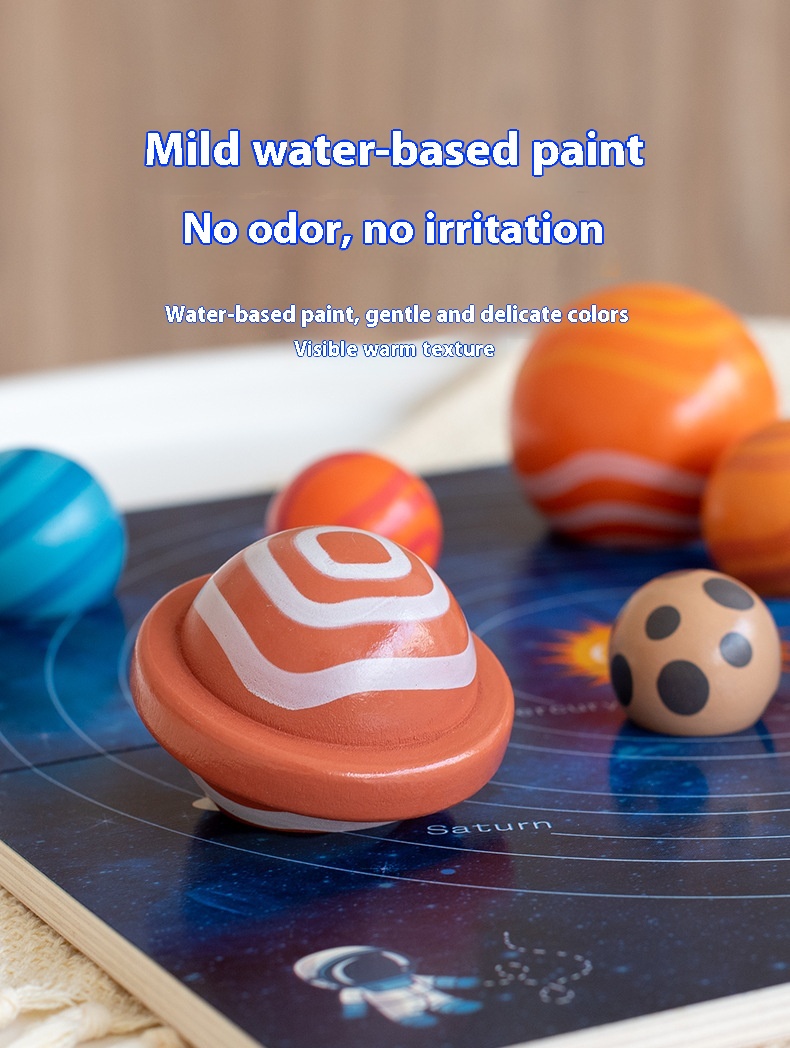
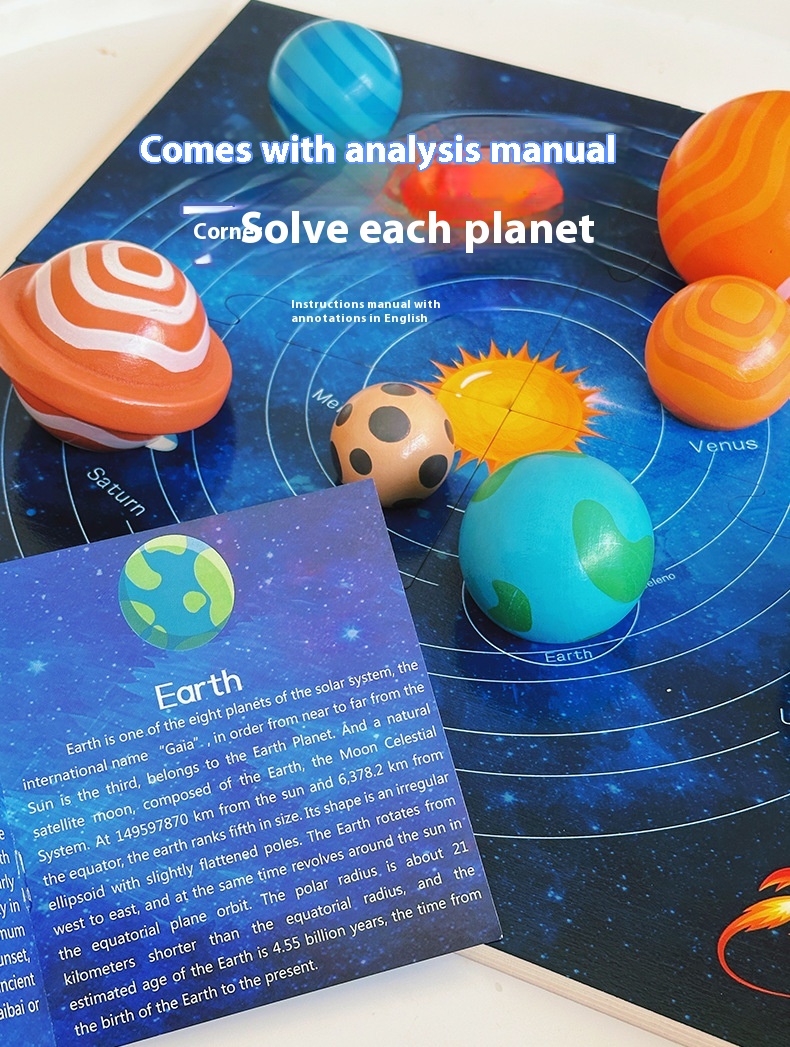
Montessori Solar System 3D Puzzle Model for Kids – Eight Planets Educational Astronomy Toy
Introduce your child to the fascinating world of space and astronomy with our Montessori Solar System 3D Puzzle Model for Kids, an engaging educational toy designed to inspire curiosity, creativity, and early scientific exploration. Featuring the eight planets of our solar system, this interactive puzzle model offers children an exciting opportunity to discover basic astronomy concepts through hands-on learning and imaginative play.
Inspired by Montessori educational principles, this children's solar system educational puzzle combines visual learning with interactive activities that encourage observation, problem-solving, and spatial awareness. Whether your child is beginning to learn planet names or exploring the arrangement of our solar system, this 3D puzzle provides a fun introduction to space science.
Perfect for supervised home learning, preschool science activities, classroom demonstrations, and educational playtime, this Montessori-inspired solar system model helps make astronomy more accessible and engaging for young learners.
Explore the Eight Planets of Our Solar System
The Montessori Eight Planets 3D Puzzle introduces children to the eight recognized planets that orbit the Sun.
Through visual exploration and interactive learning, children can begin to understand the basic structure of our solar system.
The eight planets include Mercury, Venus, Earth, Mars, Jupiter, Saturn, Uranus, and Neptune.
Learn Planet Names and Their Order
One of the most engaging activities with a solar system puzzle is learning the names and positions of the planets.
Children can practice identifying each planet and arranging them in their correct order from the Sun.
The order of the eight planets is:
-
Mercury
-
Venus
-
Earth
-
Mars
-
Jupiter
-
Saturn
-
Uranus
-
Neptune
This activity introduces basic astronomy vocabulary and encourages visual memory.
Discover Fascinating Planet Facts
Parents and educators can use the solar system model to introduce simple facts about the planets.
Mercury: The closest planet to the Sun and the smallest planet in our solar system.
Venus: A rocky planet known for its extremely hot surface.
Earth: Our home planet and the only world currently known to support life.
Mars: Often called the Red Planet because of its reddish appearance.
Jupiter: The largest planet in our solar system.
Saturn: Famous for its beautiful and extensive ring system.
Uranus: An ice giant that rotates with an unusually large axial tilt.
Neptune: The farthest recognized planet from the Sun.
These facts can encourage children to ask questions and develop an early interest in space exploration.
Interactive 3D Solar System Puzzle for Hands-On Learning
The Children's Solar System 3D Puzzle Model offers a visual and interactive approach to early astronomy education.
Three-dimensional learning models allow children to explore spatial relationships and understand how individual components form a larger system.
Unlike flat illustrations, a 3D puzzle provides a physical representation of the solar system that children can observe from different angles.
Encourage Spatial Awareness and Visual Learning
Spatial awareness involves understanding the position and relationship of objects.
A solar system model can help children explore the relative arrangement of planets and their relationship to the Sun.
Through age-appropriate puzzle activities, children may practice observation, positioning, and visual recognition.
Develop Problem-Solving Through Puzzle Activities
Assembling a 3D puzzle can introduce simple problem-solving challenges.
Children may need to identify matching pieces, determine appropriate positions, and follow the intended assembly sequence.
These activities can encourage concentration, patience, and logical thinking.
Montessori-Inspired Early Childhood Astronomy Education
Our Montessori Solar System Educational Toy is inspired by hands-on learning approaches that encourage curiosity and independent discovery.
Montessori-inspired educational activities often emphasize observation, experimentation, and practical engagement with learning materials.
The solar system puzzle introduces these concepts through a fascinating science theme.
Learn Through Observation and Exploration
Children can explore the model while identifying planets, comparing visual features, and discussing their characteristics.
Parents can encourage curiosity by asking questions about the Sun, Earth, and other planets.
These conversations help make scientific concepts more approachable for young learners.
Encourage Independent Discovery
A solar system puzzle can provide opportunities for children to explore astronomy at their own pace.
With appropriate guidance, children may practice arranging planet components, identifying different objects, and reviewing familiar information.
Early STEM Learning Through Space Science
The Montessori Eight Planets Astronomy Puzzle introduces basic STEM-related concepts through interactive learning.
STEM education includes science, technology, engineering, and mathematics.
Astronomy-themed activities can encourage children to explore scientific observation, spatial relationships, and basic reasoning.
Introduce Basic Astronomy Concepts
Children can begin learning that the Sun is a star and that the eight planets orbit around it.
Parents can also explain that Earth is one of the planets in the solar system.
These simple concepts provide a foundation for future science learning.
Explore Planet Sizes and Distances
A solar system model can help introduce the idea that planets vary in size and distance from the Sun.
However, most educational solar system models are not built to the same scale for both planet sizes and orbital distances.
Parents and educators can explain that the puzzle is a simplified representation designed to help children understand the general arrangement of the planets.
Fine Motor Skills and Hand-Eye Coordination Activities
The Montessori 3D Solar System Puzzle Toy can provide opportunities for children to practice controlled hand movements while interacting with the puzzle components.
Fine motor skills involve the use of small muscles in the hands and fingers.
Practice Grasping and Positioning
Handling appropriately sized puzzle pieces can encourage children to practice grasping, lifting, and positioning objects.
These activities offer opportunities to develop familiarity with controlled movements.
Encourage Visual Coordination
Puzzle activities often require children to observe a location and guide a component into the correct position.
This combination of visual attention and hand movement provides opportunities to practice hand-eye coordination.
Perfect Educational Toy for Home and Classroom Learning
The Eight Planets 3D Puzzle Model can be incorporated into age-appropriate science activities at home and in educational settings.
Its astronomy theme makes it a useful visual learning aid for introducing children to the solar system.
Fun Home Learning Activities
Parents can use the puzzle to introduce planet names, colors, and basic astronomy facts.
Simple activities may include identifying Earth, locating the closest planet to the Sun, or naming the largest planet.
Interactive Classroom Science Lessons
Educators may use the solar system model during introductory astronomy lessons.
Children can explore the order of the planets, discuss their basic characteristics, and participate in guided science activities.
The model can also complement educational books, diagrams, and astronomy videos.
Why Choose Our Montessori Solar System 3D Puzzle?
Our Montessori Solar System Eight Planets Puzzle Model combines interactive learning, astronomy education, and creative exploration.
Its three-dimensional format offers children an engaging way to discover the planets and explore basic space science concepts.
Key Product Highlights
-
Eight Planets Educational Theme: Introduces Mercury, Venus, Earth, Mars, Jupiter, Saturn, Uranus, and Neptune.
-
Interactive 3D Puzzle Model: Offers hands-on exploration of the solar system.
-
Montessori-Inspired Learning: Encourages observation and independent discovery.
-
Early STEM Education: Introduces basic astronomy and spatial concepts.
-
Planet Recognition Activities: Helps children practice identifying and naming planets.
-
Problem-Solving Opportunities: Encourages logical thinking during puzzle activities.
-
Fine Motor Skill Practice: Provides opportunities for controlled hand movements.
-
Screen-Free Educational Play: Offers a physical learning experience without relying on digital entertainment.
-
Home and Classroom Learning: Suitable for supervised educational activities when age appropriate.
Thoughtful Educational Gift for Young Space Explorers
The Montessori Solar System 3D Educational Puzzle can make a thoughtful gift for children who enjoy science, planets, space, and creative learning activities.
Its engaging astronomy theme makes it an attractive addition to an educational toy collection.
Suitable Gift Occasions
-
Children's birthdays and celebrations
-
Holiday and festive gifts
-
STEM educational toy collections
-
Montessori-inspired learning activities
-
Preschool and elementary science lessons
-
Home learning and educational projects
-
Space-themed gifts for children
-
Classroom astronomy learning resources
Always confirm the manufacturer's recommended age range before purchasing.
Important Safety and Age Recommendations
Safety is important when selecting 3D puzzles for young children.
Before use, verify the manufacturer's recommended age range, included components, materials, and applicable toy safety certifications.
Some 3D puzzles contain small pieces or detachable components that may present choking hazards to children under three years old.
Inspect all puzzle components for sharp edges, cracks, or damage.
Children should use the toy under appropriate adult supervision.
Choosing the Right Solar System Puzzle
When selecting an astronomy puzzle, consider the child's developmental stage, the complexity of assembly, and the size of the components.
Simpler models may be suitable for younger learners, while more detailed 3D puzzles may be better suited to older children.
The product should not be described as suitable for babies or all toddlers without verified manufacturer guidance.
Inspire Space Discovery with a Montessori Solar System 3D Puzzle
Bring the wonders of astronomy into early childhood learning with our Montessori Solar System 3D Puzzle Model for Kids.
Whether children are identifying planets, exploring their arrangement around the Sun, or completing interactive puzzle activities, this educational model offers opportunities for scientific curiosity and hands-on discovery.
Its eight-planet theme and three-dimensional design make it an appealing learning resource for young space enthusiasts.


