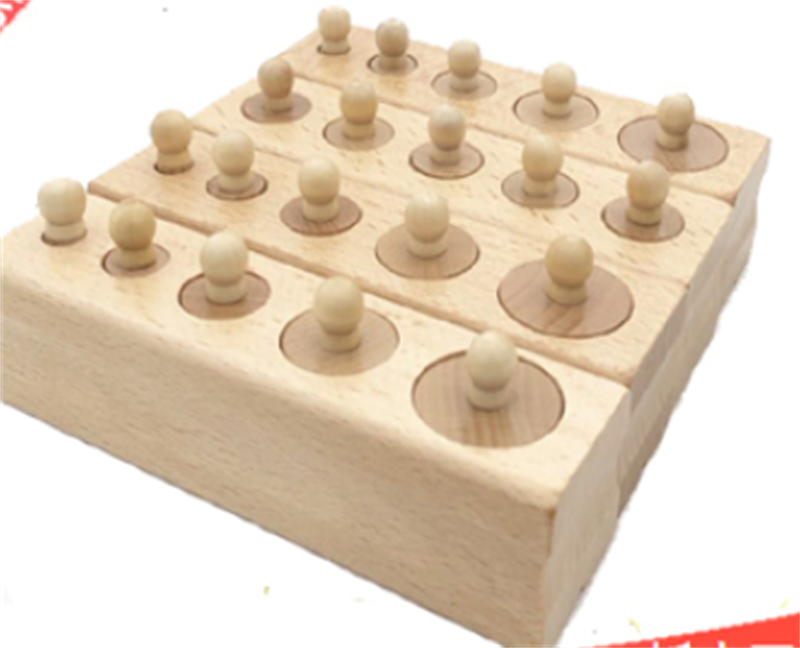
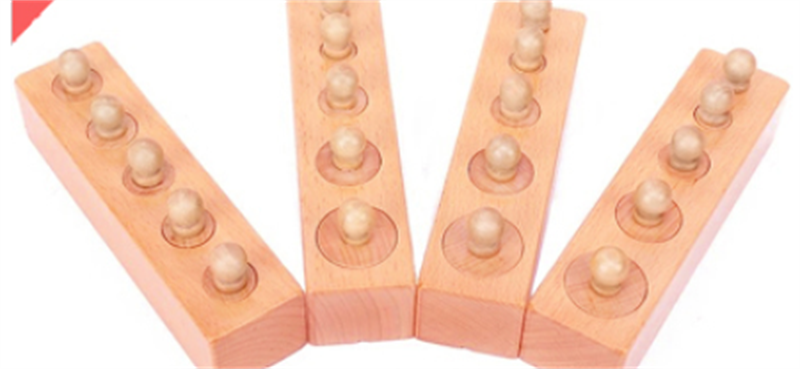
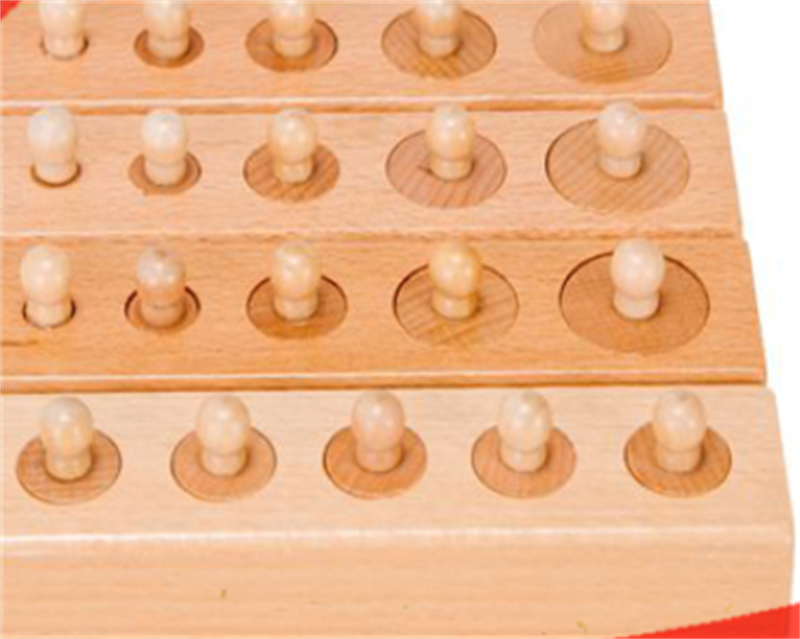
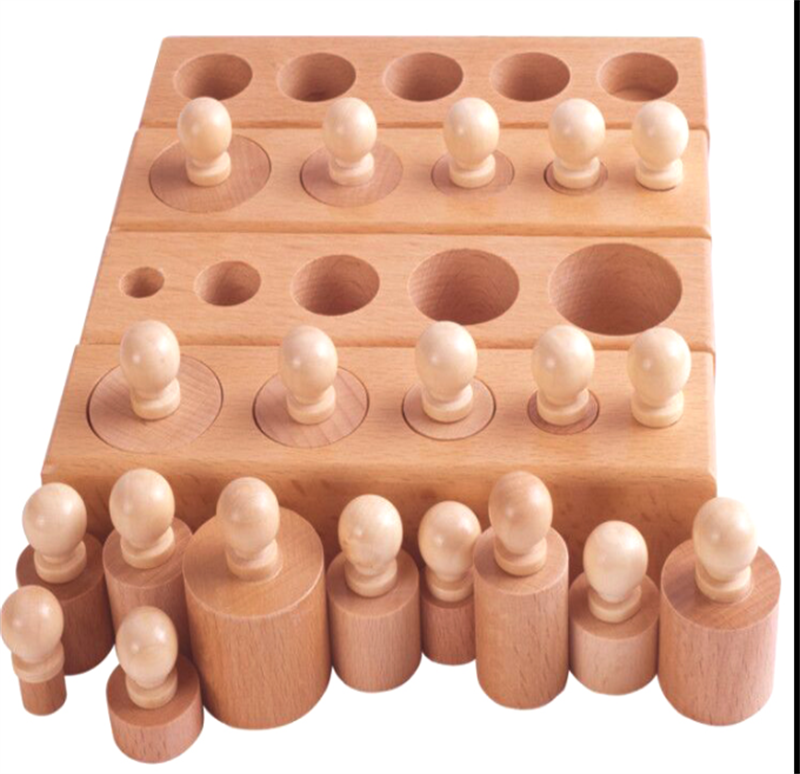
Montessori Socket Cylinder Teaching Aids Wooden Educational Learning Toy
Couldn't load pickup availability
Description
Product information:
Product Name: Montessori Socket Cylinder Teaching Aids Wooden Educational Learning Toy
Product material: Imported beech wood
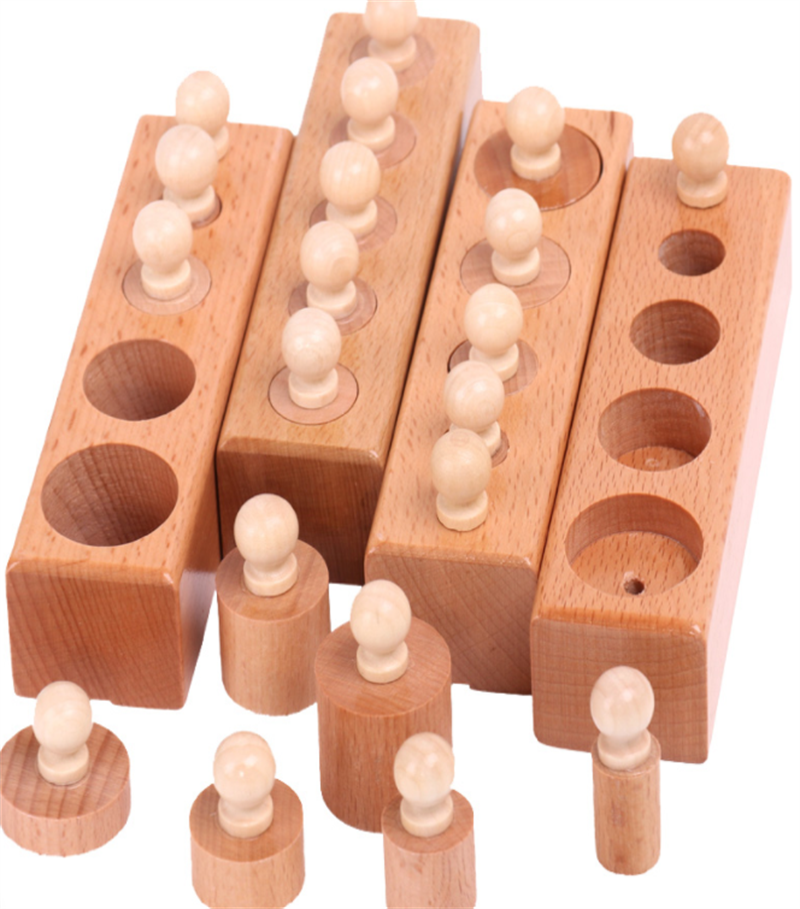
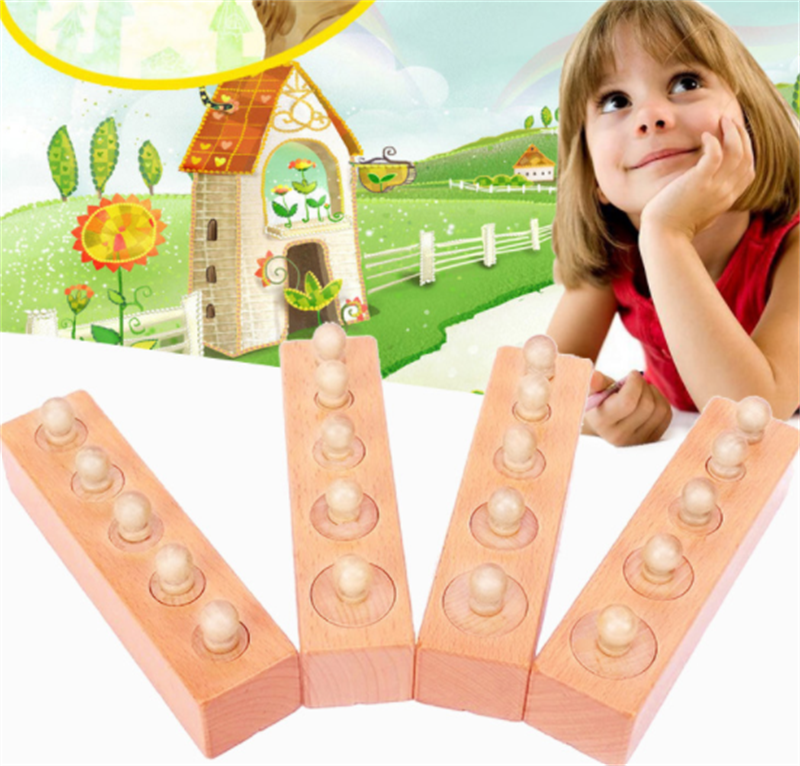
Included accessories: ABCD four sets of home version socket cylinder
Education Category: Professional Edition Sensory Teaching Aids
Product weight: 0.7kg
Applicable age: 12 months and above
Features:
1. Material
Imported beech, with clear stripes, light hardness and even texture
2. Handle design
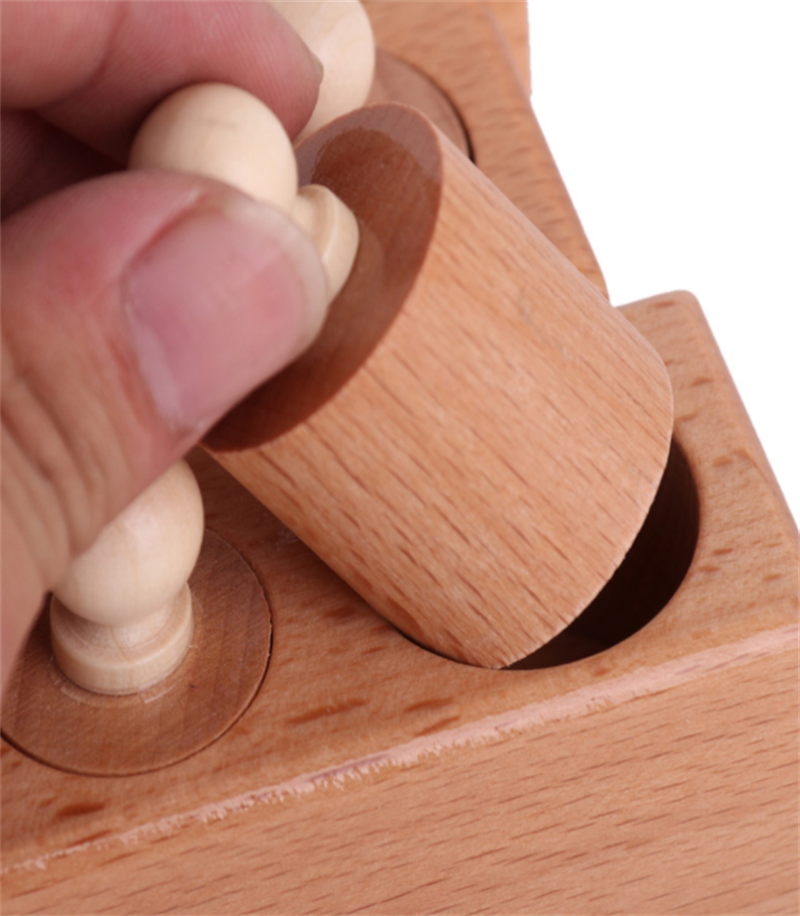
Meticulous conception, designed according to the characteristics of the baby's fingers, easy for the baby to grasp and pinch
3. Manual polishing
Purely hand-polished, with rounded corners, delicate and smooth, gentle to the touch
Montessori Socket Cylinder Teaching Aids Wooden Educational Learning Toy
Introduce children to hands-on learning with the Montessori Socket Cylinder Teaching Aids Wooden Educational Learning Toy, a classic early-learning activity designed to help children explore size, shape, depth, visual comparison, coordination, and problem-solving through practical play.
Inspired by Montessori educational principles, socket cylinder activities encourage children to learn independently by observing differences between cylinders and matching each piece with the correct opening. Instead of relying on electronic sounds, lights, or screens, children interact directly with the learning material, strengthening important developmental skills through repetition and discovery.
The activity helps children compare dimensions, recognise subtle differences, practise controlled hand movements, and understand how individual pieces correspond to specific spaces. As children repeatedly remove and replace the cylinders, they can gradually improve accuracy, concentration, coordination, and confidence.
Suitable for home learning, preschool activities, Montessori-inspired classrooms, homeschooling, educational playrooms, and supervised independent learning, this socket cylinder teaching aid provides a practical and engaging introduction to early sensory and cognitive learning.
Hands-On Montessori Learning
Montessori-style learning places strong emphasis on children interacting directly with physical materials.
The Montessori Socket Cylinder Teaching Aid supports this approach by allowing children to explore each cylinder through touch, observation, comparison, and placement.
Rather than simply being shown the difference between large and small objects, children experience those differences physically.
They can remove the cylinders, examine them, compare them, and determine where each piece belongs.
This type of hands-on activity can support:
-
Fine motor skills
-
Hand-eye coordination
-
Size discrimination
-
Visual recognition
-
Spatial awareness
-
Concentration
-
Logical thinking
-
Problem-solving
-
Matching skills
-
Independent learning
-
Memory
-
Controlled movement
-
Early mathematical thinking
The activity can be repeated many times, allowing children to become progressively more familiar with the differences between the individual pieces.
Learn Through Size and Dimension
One of the main educational purposes of socket cylinder activities is helping children recognise differences in dimensions.
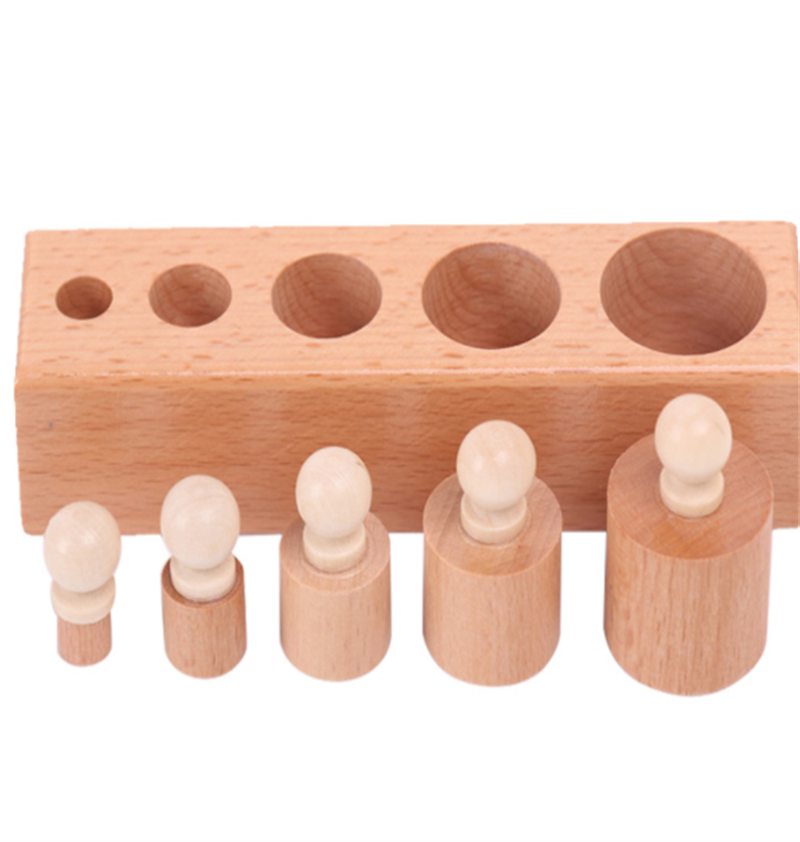
Children may observe that some cylinders are:
-
Taller
-
Shorter
-
Wider
-
Narrower
-
Larger
-
Smaller
-
Deeper
-
Shallower
Understanding these differences helps build an early foundation for comparison and measurement concepts.
Children begin learning that objects can have multiple physical characteristics and that those characteristics determine where an object fits.
This is an important early step toward later mathematical concepts involving measurement, geometry, size, volume, and spatial reasoning.
Develop Fine Motor Skills
Fine motor development involves the small muscles of the fingers, hands, and wrists.
Children use these muscles during many everyday activities, including handwriting, drawing, dressing, using utensils, turning pages, handling tools, and building with small objects.
The Montessori Socket Cylinder Teaching Aid encourages children to grasp individual cylinders carefully, lift them from the board, reposition them, and return them to the correct sockets.
These repeated movements provide useful practice for controlled finger and hand movements.
Depending on the specific product design, children may also need to use a precise fingertip grip when handling the cylinder pieces.
This can make the activity particularly valuable as part of early fine motor learning.
Strengthen Hand-Eye Coordination
Children must visually identify the correct socket and then guide the cylinder into position.
This requires the eyes and hands to work together.
If the cylinder is not aligned correctly, the child must adjust its position until it fits.
These small corrections provide repeated practice in hand-eye coordination.
As children become more familiar with the activity, their placement may become smoother and more accurate.
Encourage Visual Discrimination
Visual discrimination is the ability to recognise differences and similarities between objects.
The cylinders may look similar at first glance, but closer observation reveals variations in height, width, or overall size.
Children must pay attention to these differences in order to determine which socket matches each cylinder.
This can help strengthen careful observation.
Visual discrimination is also an important skill for later learning, including recognising letters, numbers, shapes, symbols, and patterns.
Improve Concentration
Completing a socket cylinder activity requires attention.
Children need to observe the pieces, compare them with the available sockets, and work through the task step by step.
This provides an opportunity to practise concentration in a calm and structured way.
Unlike toys that constantly produce sounds or visual stimulation, the socket cylinder activity encourages children to focus on the physical task itself.
Repeated use can help children become more comfortable spending time on a single activity.
Encourage Independent Learning
A well-designed Montessori activity allows children to experiment and discover solutions independently.
The socket cylinder board provides natural feedback.
If a cylinder does not fit correctly, the child can see or feel that something is wrong and try another position.
This reduces the need for an adult to immediately provide the correct answer.
Children can learn through observation, trial, correction, and repetition.
This supports independence and allows children to experience the satisfaction of solving the activity themselves.
Develop Problem-Solving Skills
The socket cylinder activity presents a simple but meaningful problem:
Which cylinder belongs in which space?
To solve it, children may need to compare several pieces and sockets.
They can test one cylinder, notice that it is too large or too small, and then make a different choice.
This process involves:
-
Observation
-
Comparison
-
Testing
-
Correction
-
Logical reasoning
-
Decision-making
These are valuable problem-solving skills that can be applied to many other learning situations.
Introduce Early Mathematical Concepts
Although the socket cylinder activity does not require numbers, it can help introduce mathematical thinking.
Children naturally begin comparing:
-
Bigger and smaller
-
Wider and narrower
-
Taller and shorter
-
Equal and different
-
More and less
-
Size and proportion
Adults can introduce these words while children play.
For example:
“Which cylinder is taller?”
“Can you find the smallest one?”
“Which opening is wider?”
“Is this cylinder too big for that socket?”
“Which two cylinders look most similar?”
These conversations can help children connect physical experiences with early mathematical vocabulary.
Build Spatial Awareness
Spatial awareness involves understanding how objects relate to one another and to the space around them.
When children use the socket cylinder teaching aid, they must consider:
-
Position
-
Depth
-
Orientation
-
Width
-
Height
-
Alignment
-
Space
They learn that each cylinder occupies a specific amount of space and only fits correctly when matched with the corresponding socket.
This type of learning can support later activities involving puzzles, construction toys, geometry, drawing, building, and everyday navigation.
Support Memory Development
As children repeat the activity, they may begin remembering where individual cylinders belong.
What initially requires trial and error may gradually become a familiar sequence.
Adults can turn the activity into a memory challenge by removing several cylinders and asking the child to return them without assistance.
Children can also be asked to identify which cylinder is missing or remember the position of a particular size.
These simple variations can keep the activity engaging over time.
Encourage Order and Sequencing
Montessori activities often encourage children to notice patterns and order.
Socket cylinders can be arranged or compared according to characteristics such as height or width.
Children may begin recognising gradual changes between pieces.
This can support early sequencing skills.
For example, children can be encouraged to identify:
-
Smallest to largest
-
Shortest to tallest
-
Narrowest to widest
Sequencing activities provide an early foundation for understanding patterns, progression, and order.
Screen-Free Educational Play
The Montessori Socket Cylinder Teaching Aid offers a screen-free learning activity that encourages children to interact directly with physical materials.
No phone, tablet, computer, battery, or electronic application is required for the basic activity.
This makes it suitable for quiet learning time, classrooms, home learning areas, and Montessori-inspired play spaces.
Children can work at their own pace and repeat the activity as often as they like.
Suitable for Home Learning
Parents can easily incorporate the socket cylinder activity into home learning routines.
The toy can be placed in an accessible learning area where children can choose it independently.
Adults can introduce the activity by demonstrating how to remove and replace a few cylinders.
After the child understands the basic task, they can be encouraged to continue independently.
Parents can also ask simple questions to extend the educational value.
For example:
“Which one is the biggest?”
“Can you find the narrowest cylinder?”
“Which socket do you think this belongs in?”
“Why doesn't this cylinder fit here?”
“Can you put them back without my help?”
These questions encourage children to observe and reason.
Useful for Montessori-Inspired Classrooms
The socket cylinder teaching aid can also be used in preschool, daycare, kindergarten, and Montessori-inspired classroom environments.
Teachers may use it during:
-
Independent learning sessions
-
Fine motor activities
-
Sensory learning
-
Matching activities
-
Quiet work periods
-
Learning stations
-
Early mathematics activities
-
Hand-eye coordination exercises
Children can work individually while teachers observe how they approach the task.
Learn Through Repetition
Repetition plays an important role in early childhood learning.
A child may complete the same socket cylinder activity multiple times, but each repetition can reinforce:
-
Memory
-
Coordination
-
Recognition
-
Confidence
-
Accuracy
-
Concentration
The first attempt may involve considerable experimentation.
Later attempts may become faster and more deliberate.
This progression allows children to experience their own improvement naturally.
Encourage Patience and Persistence
Some cylinders may look very similar, making the activity more challenging.
Children may occasionally place a cylinder in the wrong socket or discover that a piece does not fit.
Instead of immediately correcting them, adults can allow children time to reconsider the problem.
This encourages persistence.
Children learn that an incorrect attempt is simply part of the process and that they can try again.
Promote Controlled Movement
Montessori learning materials often encourage careful, deliberate movement.
Children learn to lift and place pieces rather than throwing or dropping them.
The socket cylinder activity rewards precision because the cylinders need to be aligned correctly with their corresponding openings.
This can help children practise slower, more controlled movements.
Encourage Sensory Exploration
The socket cylinder teaching aid provides a tactile learning experience.
Children can feel differences in size, weight, shape, and proportion while handling the pieces.
This physical experience can make abstract concepts easier to understand.
Instead of simply hearing that one object is larger than another, the child can hold both pieces and compare them directly.
A Classic Montessori-Inspired Activity
Cylinder-based activities have long been associated with Montessori-inspired learning because they combine simple design with multiple developmental opportunities.
The activity does not require complicated instructions.
The educational value comes from the child's interaction with the materials.
Children observe, compare, test, adjust, and learn through experience.
This simplicity makes socket cylinder activities suitable for repeated educational use.
A Useful Educational Gift
The Montessori Socket Cylinder Teaching Aid can be considered as a thoughtful educational gift for children who enjoy hands-on activities, puzzles, matching games, or wooden learning materials.
Suitable occasions may include:
-
Birthdays
-
Christmas
-
Preschool gifts
-
Educational gifts
-
Montessori-inspired gifts
-
Homeschooling resources
-
Classroom learning materials
It can also complement other educational products such as shape sorters, number boards, alphabet puzzles, stacking toys, and sensory activities.
Product Features
-
Montessori-inspired educational learning aid
-
Socket cylinder matching activity
-
Hands-on wooden learning material
-
Encourages size recognition
-
Supports visual discrimination
-
Helps develop fine motor skills
-
Promotes hand-eye coordination
-
Encourages spatial awareness
-
Supports problem-solving
-
Helps develop concentration
-
Encourages independent learning
-
Introduces early mathematical comparisons
-
Screen-free educational activity
-
Suitable for home and classroom learning
-
Reusable learning resource
Product Specifications
Product Type: Montessori Socket Cylinder Teaching Aid
Category: Educational Learning Toy
Learning Style: Montessori-Inspired Hands-On Learning
Material: Wooden educational components
Activity Type: Cylinder Matching, Placement and Size Comparison
Educational Focus: Size Recognition, Fine Motor Skills, Coordination, Spatial Awareness and Problem-Solving
Play Style: Independent or Guided Learning
Recommended Environment: Home, Preschool, Montessori Classroom, Early Learning Centre and Homeschool
Core Skills: Fine Motor Development, Visual Discrimination, Hand-Eye Coordination, Logical Thinking, Concentration and Spatial Recognition
Please note that exact dimensions, colours, number of cylinders, wood tones, packaging, and design details may vary according to the specific product model or production batch.
How to Use
Place the cylinder board on a stable surface.
Allow the child to look at the completed activity before removing any pieces.
Demonstrate how one cylinder can be gently removed and returned to its corresponding socket.
Remove several cylinders and encourage the child to determine where they belong.
Allow the child to experiment rather than correcting every mistake immediately.
As the child becomes more confident, remove more cylinders or create additional comparison activities.
Educational Activity Ideas
Find the Largest Cylinder
Ask the child to identify the largest cylinder.
Then ask them to find the smallest.
This introduces basic comparison vocabulary.
Size Matching
Remove several cylinders and encourage the child to match each one to the correct opening.
Tall and Short
Compare two cylinders and ask which one is taller or shorter.
Wide and Narrow
Encourage the child to compare cylinder widths.
Memory Challenge
Allow the child to look at the completed board, remove several pieces, and ask them to remember where each one belongs.
Complete Independently
Remove all cylinders and encourage the child to rebuild the complete board without assistance.
Compare Two Pieces
Give the child two cylinders and ask them to describe how they are different.
Care Instructions
To help maintain the product:
-
Store in a clean, dry environment.
-
Avoid soaking wooden components in water.
-
Wipe gently with a soft, slightly damp cloth when required.
-
Allow components to dry completely before storage.
-
Keep all pieces together when not in use.
-
Avoid prolonged exposure to excessive moisture or heat.
-
Regularly inspect components before use.
-
Use appropriate adult supervision according to the child's age and development.
Frequently Asked Questions
What is a Montessori Socket Cylinder Teaching Aid?
It is a hands-on educational activity where children remove and match cylinders with corresponding sockets based on their dimensions.
What skills can it support?
The activity can support fine motor development, hand-eye coordination, concentration, visual discrimination, size recognition, spatial awareness, memory, and problem-solving.
Does it teach mathematical concepts?
It can introduce early comparison concepts such as larger, smaller, wider, narrower, taller, and shorter.
Is it suitable for Montessori-style learning?
Yes. The activity is inspired by Montessori principles of hands-on exploration, independent learning, observation, and repetition.
Can children use it independently?
Once children understand how the activity works, it can be suitable for independent learning with appropriate supervision.
Can it be used in classrooms?
Yes. It can be incorporated into Montessori-inspired classrooms, preschools, early learning centres, homeschooling programmes, and educational activity stations.
Is it electronic?
No. It is a physical, screen-free learning activity.
Can the activity be repeated?
Yes. Repetition is one of the main benefits of this type of educational material because children can gradually improve their recognition, coordination, and accuracy.
Explore Size, Shape and Dimension Through Hands-On Learning
The Montessori Socket Cylinder Teaching Aids Wooden Educational Learning Toy combines simple physical interaction with meaningful early learning opportunities.
By removing, comparing, matching, and replacing the cylinder pieces, children can explore differences in size and dimension while practising concentration, coordination, problem-solving, and independent learning.
Whether used at home, in a classroom, or as part of a Montessori-inspired learning environment, this activity provides a practical way for children to develop important foundational skills through repeated hands-on discovery.